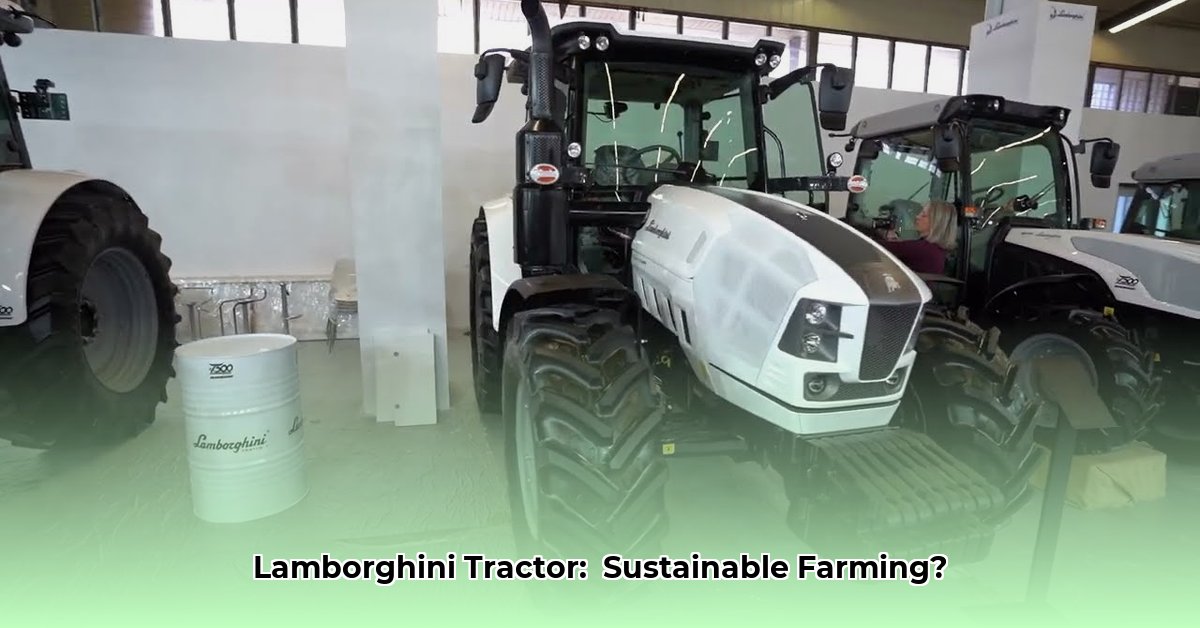
Lamborghini tractors are renowned for their power and precision engineering. But how do they measure up in the context of sustainable farming practices in 2023? This in-depth review examines their strengths and weaknesses, offering actionable insights for farmers, the manufacturer, and regulatory bodies. For more information on Clarkson's Farm Lamborghini tractor, check out this site.
Powerhouse Performance: Engineered for Efficiency
Lamborghini's 2023 tractor lineup boasts impressive engines designed not just for power, but for fuel efficiency. This translates to a smaller carbon footprint; less fuel burned means fewer emissions. However, quantifiable data on fuel efficiency across various applications and the total lifecycle emissions is currently lacking. This is critical information for a complete environmental assessment. What steps is Lamborghini taking to minimize its environmental impact?
Beyond the Machine: A Holistic Approach to Sustainability
Sustainable farming requires a comprehensive approach. Lamborghini tractors contribute by enabling precise planting and harvesting, minimizing waste and optimizing resource use. Yet, the lack of comprehensive data on fuel efficiency, emissions, and material sourcing hinders a full understanding of their long-term environmental impact. Transparency is key. Publishing detailed sustainability reports would significantly enhance Lamborghini's image and inform consumer choices. How can Lamborghini improve its sustainability reporting and transparency?
The Price Tag: Is It Worth the Investment?
Lamborghini tractors represent a substantial investment. Before purchasing, a thorough cost-benefit analysis is crucial. This should encompass initial purchase price, fuel efficiency, anticipated maintenance costs, and potential resale value. Direct comparisons with competitors, such as John Deere, are vital to assess the true value proposition. How will investing in a Lamborghini tractor affect net profitability?
Reaching Wider Markets: Accessibility and Future Growth
Lamborghini's high price point limits accessibility for smaller farms and farmers in developing regions. Strategies to address this include developing more affordable models or exploring innovative financing options like leasing programs. Expanding market reach is crucial for maximizing the positive impact of these tractors on global sustainable farming.
Actionable Steps: Recommendations for All Stakeholders
This section lays out concrete steps for various stakeholders to advance sustainable agriculture:
For Lamborghini: Publicly release detailed sustainability metrics (fuel consumption, emissions data) for all models. Invest in R&D for sustainable technologies (biofuels, precision agriculture systems) and develop more affordable models or attractive financing programs.
For Farmers and Agricultural Businesses: Conduct comprehensive cost-benefit analyses before equipment purchases; explore financing options; and prioritize environmentally conscious farming practices.
For Governments and Regulatory Agencies: Enforce strict environmental reporting standards for agricultural equipment manufacturers; offer financial incentives for sustainable technologies; and establish clear guidelines for evaluating sustainability claims.
The Need for More Data: Areas for Further Research
A significant limitation is the lack of substantial data on the environmental impact of Lamborghini's 2023 tractor line. Independent research is needed to provide comparative data on fuel efficiency (liters per hectare) and emissions (grams of CO2 equivalent per hectare). This would allow for a fairer assessment of their role in sustainable agriculture. What are the most pressing research needs regarding the environmental impact of Lamborghini tractors?
Lamborghini vs. John Deere: A Cost and Sustainability Comparison
This section directly addresses the cost and sustainability implications of Lamborghini tractors compared to John Deere, a dominant player in the market.
While Lamborghini offers high-performance, its premium price tag needs careful consideration against John Deere's affordability and extensive service network. The lack of comprehensive sustainability data for both brands hinders a robust comparison of their environmental impact. A thorough assessment requires detailed information on fuel efficiency, greenhouse gas emissions, and lifecycle assessments. Choosing between these brands depends on farm size, operational needs, budget, and access to support. What additional data points would strengthen future cost-benefit analyses between Lamborghini and John Deere tractors?